

The month-long reprieve announced last Friday was meant to cool soaring energy prices, the treasury secretary has said
The US decision to extend sanctions relief for Russian oil was taken to prevent crude prices from exploding amid the Iran war and followed pleas from energy-vulnerable countries, Treasury Secretary Scott Bessent has said.
Testifying before a Senate appropriations subcommittee on Wednesday, Bessent defended last week’s U‑turn to prolong a general license allowing deliveries of Russian oil and petroleum products that were already loaded on tankers. The waiver, which runs until May 16, follows an earlier 30‑day relaxation that expired on April 11.
Bessent said that during the IMF and World Bank spring meetings in Washington he was approached by finance ministers and central bank chiefs from “more than ten of the most vulnerable and poorest countries in terms of energy,” who asked the US to extend sanctions relief for another month.
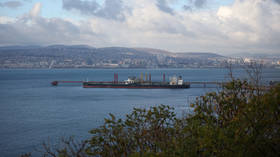
Global fuel prices have soared since the US‑Israeli war on Iran disrupted shipping through the Strait of Hormuz, a vital waterway that previously carried around a quarter of the world’s seaborne oil trade. The disruption has intensified pressure on energy markets, sending crude higher and pushing up fuel costs worldwide, particularly in countries dependent on Gulf supplies.
Bessent told lawmakers the waiver allowed Treasury to put “more than 250 million barrels on the water” and ease fears over supply. With crude trading near $100, he claimed that without the extra Russian barrels “they might have been at $150,” saying the measure was intended to shield both US consumers and allies from even steeper fuel costs.
US gasoline prices have soared, putting pressure on households ahead of November’s midterm elections. The national average exceeded $4 per gallon, up from $2.94 in late February before the Iran conflict, according to data from the American Automobile Association.
Bessent rejected claims that Moscow has reaped a multibillion‑dollar windfall, arguing that Russian oil continues to sell at a discount and that lower global prices outweigh any additional volumes Moscow can sell. The extension came just days after Bessent had publicly said the administration would not renew the license.
The Financial Times has called Russia “the biggest winner from the conflict in the Middle East,” calculating that Moscow is earning up to $150 million a day in extra budget revenues.
The Kremlin has confirmed a “modest increase” in oil income linked to the Middle East conflict but said it is not critical for the Russian budget or the wider economy.