

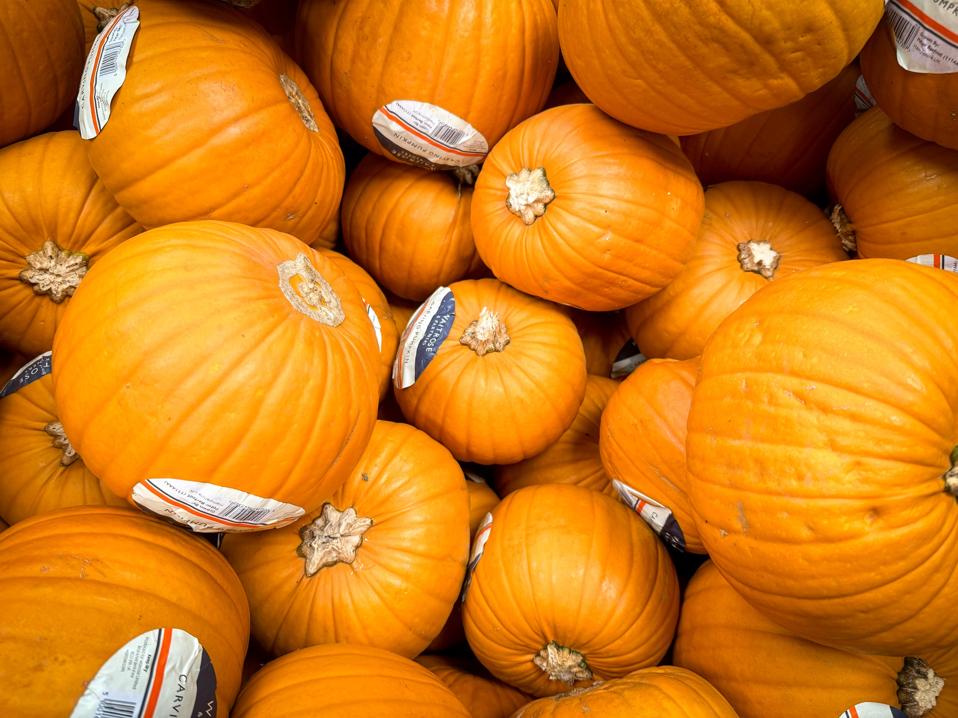
Has Halloween has become a barometer of consumer mood, resilience, and appetite for escapism in an age of financial strain? (Photo by Matt Cardy/Getty Images)
Getty Images
Not long ago, Halloween in Britain was little more than a novelty, dismissed as an American import unlikely to gain more than passing traction. Fast forward to 2025, and it has evolved into a retail engine worth close to £800 million in the UK alone. Across the Atlantic, it remains a juggernaut, projected at more than $12 billion in U.S. spending last year. Together, these figures reveal something more than seasonal fun: Halloween has become a barometer of consumer mood, resilience, and appetite for escapism in an age of financial strain.
The expansion of Halloween tells us much about the modern shopper. In both markets, households may cut back on everyday luxuries, yet they still carve out space and budget for the rituals of October. That contradiction highlights the underlying truth of consumer behaviour: people are not just buying goods, they are buying into experiences that help them momentarily step away from reality.
The Power of Participation
In the UK, even as grocery volumes dipped in 2023, price rises meant retailers recorded a £549 million uplift in sales across the fortnight leading to October 31. In the U.S., households spent on average $100 per adult across categories from candy to costumes. These numbers reveal participation more than extravagance. Halloween is not dominated by big-ticket purchases but by the millions of small, consistent decisions consumers make to mark the occasion.
That pattern is what gives retailers confidence. In uncertain markets where demand can feel fragile, Halloween offers steady engagement. It may not rival the scale of Christmas, but it has achieved something just as valuable: reliability. Retailers can count on consumers to show up for Halloween, even if the basket looks slightly different year to year.
‘Boujeeween’ – a very luxurious celebration
Boujeeween: luxury retailer Fortnum & Mason have the Halloween Hamper for sale at £300 – sweet, savoury and mouth-wateringly morbid treats needed for a truly frightful feast.
Fortnum & Mason
Perhaps the most significant evolution is demographic. Halloween is no longer a children’s festival. Adults have moved to the centre of the spend. Data from both the U.S. and UK points to rising participation in adult costumes, themed food and drink, and house parties. Alcohol brands, beauty businesses, and fashion retailers have all found ways to capitalise on the growing appetite for immersive experiences.
This is the psychology of participation at work. For children, Halloween is about dress-up and sweets. For adults, it is about nostalgia, community, and the chance to perform a different version of themselves, however fleeting. Retailers who understand that are not just selling pumpkins or plastic spiders; they are selling entry tickets into a shared cultural ritual.
Extending the Shelf Life
The commercial playbook has shifted. Retailers no longer treat Halloween as a single night but as a season in its own right. Supermarkets begin promotions in September. Specialty retailers introduce “Summerween” collections to capture spend as early as August. One of the latest innovations – the Halloween advent calendar – illustrates just how far businesses are stretching the engagement window.
This strategy works. In the UK, online Halloween sales grew by 32% year-on-year in 2024, with significant spikes in the days leading up to the event. In the U.S., digital platforms saw conversion rates jump nearly 20% in the same period. The earlier the consumer is drawn into the funnel, the more opportunities there are to upsell, cross-sell, and repeat the process across multiple channels.
Pressure, Pragmatism, and Persistence
Yet the consumer is not immune to financial strain. Surveys in both markets reveal that around half of shoppers feel they cannot afford to spend freely on Halloween extras. In the UK, the average spend per person hovers near £25, and many plan to trim back. In the U.S., nearly 40% of consumers admit to scaling down their celebrations in response to cost-of-living concerns.
What is striking, however, is that participation does not collapse. Instead, shoppers make pragmatic choices. They swap premium costumes for DIY options. They reuse decorations from previous years but still buy multipack sweets. They trade down but rarely opt out.
Retail Lessons in a Costume
For retailers on both sides of the Atlantic, Halloween offers lessons that go beyond the orange and black shelves. It proves the value of selling moments rather than merchandise. Consumers are not motivated by the functional utility of a pumpkin-shaped candle or a novelty chocolate bar. They are motivated by the feeling of belonging, nostalgia, and fun.
It also highlights the importance of agility. The winning strategies are not about flooding shelves with disposable gimmicks but about creating coherence and ranges that tie together décor, food, fashion, and digital touch-points. Bundling items into “party kits,” designing costumes with reusability in mind, and offering immersive store theatre are no longer optional flourishes; they are competitive advantages.
A Global Cultural Export
Halloween’s growing commercial footprint also raises an intriguing point about cultural exports. The U.S. may have provided the modern template, from trick-or-treating to blockbuster costume trends, but the UK and other markets have adapted it in distinctive ways. British retailers often emphasise affordability and community, while U.S. businesses lean into scale, spectacle, and licensed products from film and television.
The through-line, however, is universal: Halloween offers an accessible, democratic form of celebration. It does not require travel, formal attire, or elaborate planning. It simply asks consumers to play along, at whatever level they can afford. That universality is what gives it such commercial resilience and why it is now a fixture on calendars worldwide.
The Real Worth of Halloween
So how much is Halloween worth? The answer is not just in billions of pounds or dollars, though those numbers matter. Its true value lies in the way it exposes the modern consumer psyche. Even when cautious, shoppers invest in occasions that deliver connection and joy.
And as long as consumers continue to crave fun, Halloween will remain a lesson in the enduring power of emotion in commerce and a reminder that sometimes, the scariest thing for retailers is to underestimate the importance of play.